

As Kenya’s education system continues to evolve under the Competency-Based Curriculum (CBC), one of the most talked-about changes is the introduction of career pathways in Senior School (Grades 10–12). For many parents and learners, this transition raises important questions: What pathway should I choose? Will it affect my child’s future career? Are some pathways better than others?
Unlike the traditional system that emphasized a single national exam, CBC is designed to nurture each learner’s unique strengths, interests, and talents. The introduction of pathways marks a major shift—from generalized learning to early specialization and skills development. This blog breaks down the most frequently asked questions and provides clear, practical insights to help parents and students confidently navigate this transition.
What Are the CBC Career Pathways in Senior School?
Under the Competency-Based Education (CBE) framework, learners in Senior School choose from three main pathways, each designed to align with specific talents and career goals.
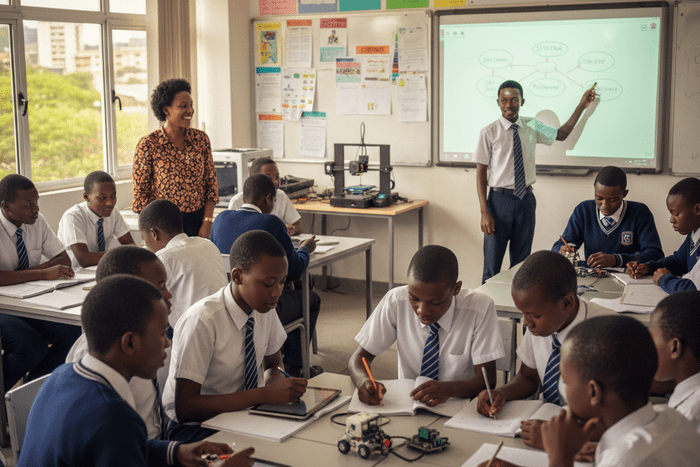
- STEM pathway (Science, Technology, Engineering, and Mathematics) is ideal for students interested in careers such as medicine, engineering, data science, and other technical fields. It emphasizes analytical thinking, problem-solving, and innovation, making it one of the most resource-intensive but highly rewarding tracks.
- Social Sciences pathway caters to learners passionate about subjects like law, business, history, languages, and international relations. It develops critical thinking, communication, and leadership skills, preparing students for careers in governance, entrepreneurship, and social development.
- Arts and Sports Science pathway is designed for creatively gifted students or those with athletic talent. It includes disciplines such as music, theatre, fine arts, and sports training, offering structured opportunities to turn talent into professional careers.
Finally, the Vocational Education pathway focuses on practical skills and is especially tailored for learners who thrive in hands-on environments, including those with special needs. It equips students with life skills and technical competencies for self-employment and the job market.
When and How Do Students Choose Their Pathway?
The decision-making process begins in Grade 9, where learners undergo assessments, career guidance, and counseling to identify their strengths and interests. Schools play a critical role in guiding both students and parents through this process, ensuring that choices are informed rather than rushed.
This stage is crucial because it sets the foundation for a learner’s academic and professional journey. However, CBC emphasizes that the decision should not be based solely on academic performance but also on passion, aptitude, and long-term goals.
Can a Student Change Their Pathway Later?
One of the most reassuring aspects of CBC is its flexibility. While students are encouraged to remain consistent in their chosen pathway to build mastery, there is room for adjustment.
If a learner realizes that their initial choice does not align with their strengths or career ambitions, they may switch pathways—provided the school can accommodate the change and the learner meets the necessary requirements. That said, frequent changes are discouraged, as each pathway requires progressive skill development over time.
Will All Schools Offer All Pathways?
Not all schools in Kenya will offer every pathway. Institutions are being categorized based on their infrastructure and resources into:
- Triple Pathway Schools (offering STEM, Social Sciences, and Arts/Sports)
- Double Pathway Schools: offering only two pathways
- Single Pathway Schools: specializing on one pathway
This means that school selection will become more strategic than ever before. Parents and students will need to consider whether a school offers the desired pathway before making placement decisions. The Ministry of Education is actively working to ensure fair distribution and accessibility across the country.
Nonetheless, it must also be acknowledged that national schools such as Alliance High School are better equipped and have greater capacity to offer a wholesome CBC learning experience compared to smaller schools. Thus, the government needs to address this gap by ensuring that even smaller schools have the necessary resources for CBC.
What Subjects Are Compulsory for All Learners?
Despite specialization, CBC ensures that all learners receive a well-rounded education. Regardless of the chosen pathway, every student must study:
- English
- Kiswahili (or Kenya Sign Language)
- Physical Education (PE)
- Community Service Learning (CSL)
These core subjects are essential in building communication skills, physical well-being, and social responsibility—key competencies for life beyond school.
How Will CBC Pathways Affect University and College Placement?
This is one of the most significant shifts from the previous system. Instead of relying solely on a final exam grade like KCSE, placement into universities and TVET institutions will be based on competencies, skills, and credits earned within a specific pathway.
For example, a learner in the STEM pathway will have a more direct route into careers such as engineering or medicine, while a student in the Arts pathway may transition into creative industries or specialized training institutions.
This approach ensures that students pursue careers aligned with their training, reducing mismatches between education and the job market.
Is One Pathway Better Than the Others?
A common misconception is that some pathways—especially STEM—are superior to others. In reality, no pathway is inherently better. Each plays a vital role in national development.
While STEM is expected to attract a larger percentage of learners due to its role in technological advancement, the Social Sciences, Arts, and Vocational pathways are equally important in building a balanced economy.
The best pathway is simply the one where a learner can excel, grow, and build a fulfilling career.
How Can Parents Support Their Children in Choosing the Right Pathway?
Parents play a critical role in guiding learners through this transition. Open conversations about interests, strengths, and career aspirations are essential. Instead of imposing preferences, parents should focus on supporting the child’s natural abilities.
Exposure also matters. Encouraging learners to explore different subjects, participate in extracurricular activities, and engage in practical experiences can help them make more informed decisions. Career guidance sessions, mentorship, and even simple discussions at home can significantly influence the final choice.
What are some of the disadvantages?
While the CBC career pathways system offers many benefits, it is not without its challenges. One key concern is the early specialization in Grade 9, which may pressure learners to make career-defining decisions before they fully understand their strengths or interests. Additionally, limited school resources mean that not all institutions can offer all pathways, potentially restricting students’ choices based on location rather than ability or passion.
There are also concerns about inequality, as well-equipped urban schools are more likely to provide better facilities for pathways like STEM and Arts compared to under-resourced rural schools. Furthermore, the shift to a competency-based assessment system can be confusing for parents and students who are more familiar with traditional exam grading, and some universities and employers are still adjusting to the new framework. These challenges highlight the need for continuous improvement, increased investment, and strong guidance systems to ensure that CBC pathways achieve their intended impact.
Preparing for Senior School: The Role of Learning Resources
As learners transition into specialized pathways, access to the right learning materials becomes increasingly important. Textbooks, revision guides, digital resources, and practical tools all contribute to a student’s success in CBC.
Parents should ensure that learners are well-equipped not only academically but also technologically—especially for pathways like STEM and Social Sciences, where research and digital literacy are essential.
Where to Buy CBC Learning Materials in Kenya
At SchoolMall Bookshop, we provide everything learners need to succeed under the CBC system—from textbooks and revision materials to essential stationery and digital learning tools. We also stock a wide variety of student laptops and tablets that support research, online learning, and project-based assessments aligned with CBC requirements.
For inquiries or orders, Call/WhatsApp us on:
0100321966 – Greenspan
0110489300 – Embakasi
0798691986 – Fedha
0755544776 – Utawala
0757951666 – Ruai
0112231229 – Online
0793488207 – Office
We provide doorstep delivery both within Nairobi and across the country.
At SchoolMall Bookshop, we are committed to supporting every learner’s journey by providing quality CBC materials and digital devices that prepare students for success in Senior School and beyond.
Final Thoughts
The introduction of CBC career pathways marks a transformative moment in Kenya’s education system. By allowing learners to specialize based on their strengths and interests, CBC is creating a generation that is not only academically competent but also skilled, innovative, and career-ready.
For parents and students, the key lies in understanding the options, asking the right questions, and making informed decisions early. With the right guidance, resources, and support, every learner can confidently step into Senior School and build a future aligned with their true potential.